




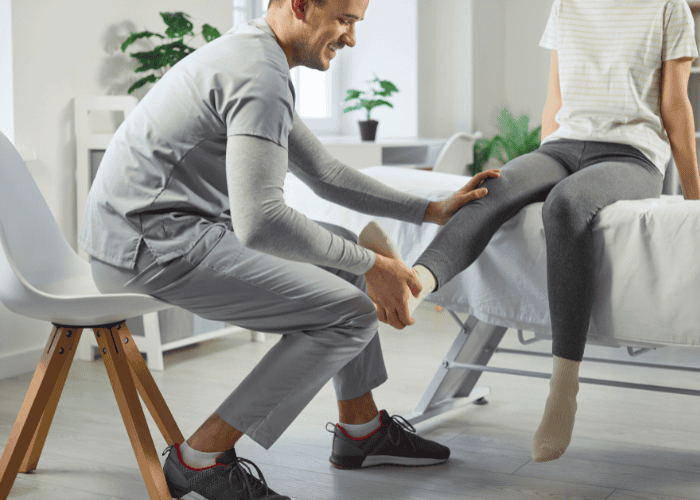

Relieving pain from an injury is one of the most common reasons a person will make an appointment for massage for injury recovery with a therapist. For helping speed the healing process of soft tissue injuries, there are few modalities as effective and as safe as massage. However, massage therapists providing massage for injury recovery must understand when that injury is in its most acute stage and what approaches are appropriate – because the acceptable healing modes within that acute stage differ greatly from those that are beneficial afterward.
What is an Acute Injury?
An acute injury is a sudden, sharp, traumatic injury that causes pain. Typically the result of an impact or trauma such as a fall, strain, sprain or collision, the cause of an acute injury is usually obvious. The signs and symptoms of an acute injury are:
- Pain
- Tenderness
- Redness
- Skin that is warm to the touch
- Swelling
- Inflammation
Traditional Acute Injury Care: R.I.C.E.
Seasoned athletes and sports medicine doctors are all too familiar with R.I.C.E., the acronym for treating acute injuries. R.I.C.E. stands for:
- Rest – Rest is vital to protect the injured muscle, tendon, ligament or other tissue from further injury. In addition, rest allows hematoma organization to begin.
- Ice – Ice reduces pain and spasm, causes vasoconstriction to help control primary edema (swelling) and lowers metabolic demand in the tissue to decrease hypoxic tissue death. Ice or cold pack application for 15-20 minutes per hour is essential, but should not exceed the time limit to prevent skin damage.
- Compression – Known to delay the healing process, swelling can be limited with compression. Besides limiting edema formation, compression also slows hemorrhage.
- Elevation – Also advised because it limits edema formation and slows hemorrhage, elevation is most effective when the injured area is raised above the level of the heart.
While R.I.C.E. is still widely known, modern evidence suggests that prolonged rest and excessive icing may delay long-term tissue recovery. Contemporary frameworks such as P.E.A.C.E. & L.O.V.E. provide a more complete understanding of injury phases and can help therapists guide safe massage care for clients.
Factors that Can Delay Recovery: H.A.R.M
Because they risk aggravating a fresh injury, there are several methods that are discouraged during this 48 hour window. Adding to the list of acronyms a therapist should know, H.A.R.M. describes four factors that could slow down injury recovery or even make the injury worse. H.A.R.M. stands for:
- Heat – Heat increases hemorrhage at an injury site. Thus, hot baths, hot showers, saunas, hot water bottles, heat packs and warming liniments should be avoided for at least 48 hours after sustaining an injury.
- Alcohol – Besides masking the pain and severity of an injury, alcohol consumption increases edema and hemorrhage at the injury site.
- Running – Running (for a lower extremity injury), or any form of exercise, has the potential to cause further damage to the injured body part within 48 hours of an injury.
- Massage – Because it encourages circulation, massage can increase edema and hemorrhage during the body’s initial response to injury. Therapists should avoid deep or circulatory massage during the acute phase, but may observe swelling, range of motion limitations, and other signs to adjust future sessions safely.
Modern Approach: P.E.A.C.E & L.O.V.E.
Modern injury management research from physiotherapy and sports medicine introduces the P.E.A.C.E. & L.O.V.E. framework, which helps therapists understand the acute and recovery phases of soft tissue injuries and guide safe massage practices without stepping outside their scope.
Below is an adapted version relevant to massage therapists working with clients:
P.E.A.C.E. – Acute Phase (first 1–3 days)
- P – Protection: Ensure that massage does not aggravate the injury; avoid techniques that strain the tissue.
- E – Elevation: Be aware that raising the injured area can help reduce swelling; note this for safe session planning.
- A – Avoid anti-inflammatories: Recognize that clients may take medications; do not prescribe or advise.
- C – Controlled rest: Understand that clients need rest; modify massage intensity and technique accordingly.
- E – Education (simplified): Provide general guidance within scope, e.g., safe movements during sessions and when to refer.
L.O.V.E. – Recovery Phase (after acute inflammation, usually 3+ days)
- L – Load (gentle): Resume massage with movements that are tolerable and pain-free.
- O – Optimism: Encourage confidence and a positive mindset, which can support recovery.
- V – Vascularization: Use massage techniques that safely support circulation and lymphatic flow.
- E – Exercise: Recommend discussion with other healthcare providers for specific exercises; stay within massage scope.
This framework helps therapists make informed decisions about safe interventions, understand the client’s healing process, and plan sessions that support recovery without overstepping professional boundaries.
Lymphatic Drainage and Massage Techniques for Acute Injuries
However, massage therapists can still apply a useful technique for acute injuries less than three days old without causing harm. While rest, ice, compression and elevation are essential and effective, they only support the cardiovascular side of acute injury physiology. R.I.C.E. overlooks the body’s natural edema removal system, the lymphatic system.
According to Pat Archer in Therapeutic Massage in Athletes, “The exudates in damaged tissue are protein-rich edema, and the presence of these proteins increases oncotic interstitial pressure, leading to secondary edema formation. To control secondary edema, the proteins must be removed from the interstitium since they cannot be reabsorbed by the capillaries. The only way to do so is to improve edema uptake through the lymphatic system.”
Thus, adding lymphatic drainage massage or gentle manual lymphatic techniques to the standard R.I.C.E. protocol will keep swelling to a minimum. By reducing swelling, the person receiving lymphatic drainage massage will have less hematoma organization and fewer repair fibers invading healthy tissues. By limiting these physiological processes, the healing time for an acute injury can be shortened.
In addition, lymphatic drainage works with ice to reduce pain by interrupting the pain-spasm-pain cycle. This can be explained via two mechanisms:
- Gate Control Theory – The light pressure and rhythmic movement of lymphatic drainage massage on the tissue are soothing and provide additional somatic stimulus to close the spinal gate to pain.
- Edema Reduction – Because it reduces edema, lymphatic drainage massage also decreases fluid pressure on the nociceptors to further decrease pain.
Safe Massage for Clients During Recovery
Once a painful injury moves past the acute stage, current recommendations emphasize gradual, controlled loading and movement rather than complete rest. Gentle circulatory massage techniques can then help restore range of motion and function, while preventing excessive scar tissue formation. These updated methods align with modern P.E.A.C.E. & L.O.V.E. principles.
Supporting Clients Through Injury Recovery
While massage therapists are typically called upon to address chronic pain, they also have a lot to offer clients with an acute injury. If the injury has just occurred, R.I.C.E. may be used for immediate pain and swelling relief, but incorporating gentle lymphatic techniques and understanding the client’s healing phase through PEACE & LOVE can improve recovery outcomes. By knowing what to include and what to avoid in freshly injured clients at each stage of recovery, massage therapists can play a key role in their healing process.
Originally posted May 2011. Updated February 4, 2026.
 Follow Us