






 Want to earn continuing education credit for this article? Learn more.
Understanding Anterior Shin Splints
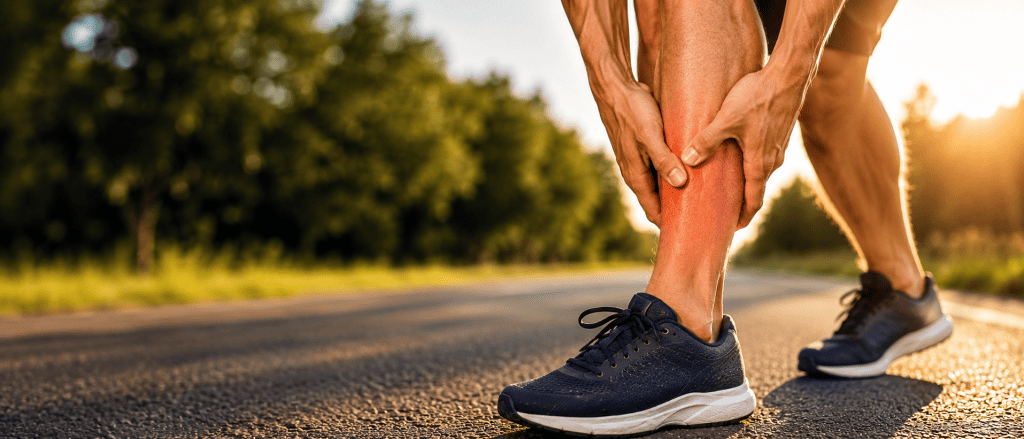
Athletes and those who treat their injuries are all too familiar with the surge of strains, sprains and tears associated with the first few weeks of athletic training. Common among runners, anterior shin splints are one of the most prominent early season injuries. Anterior shin splints can develop gradually over a period of weeks to months, or may occur after a single, excessive bout of exercise.
Definition
Often occurring bilaterally, anterior shin splints typically involve irritation, inflammation, and/or small areas of tissue breakdown in the tibialis anterior muscle where it is attached to the tibia. The pain is usually noticeable when exercise begins, then decreases as exercise continues. Often experienced as a burning sensation, the pain worsens after exercise or the following morning.
Due to the tearing of muscle fibers away from the periosteal attachment, anterior shin splints manifest as bumps and tender areas on the anterior leg. As these fibers heal, they become fibrotic, making it difficult for the muscle to lengthen normally. The fibrotic patches weaken the muscle by restricting movement, perpetuating the probability of future shin splints. Additionally, untreated shin splints place the individual at a greater risk for developing stress fractures.
Cause
Since the tibialis anterior muscle controls the lowering of the foot upon heel strike, stressing this movement can increase chances of injury. Activities leaving individuals susceptible to anterior shin splints include:
- Beginning a running program
- Excessive downhill running
- Sports requiring rapid starts and stops
Additional conditions which can increase the chances for shin splints are:
- Running on hard surfaces, or wearing shoes without adequate shock absorption
- Over-pronated (flat) feet, which increase stress on the lower leg muscles
- High arched feet due to their inability to absorb shock
- Excessive jumping, which places disproportionate stress on the toes
Prevention
According to James Mally, ND, instructor of the Institute for Integrative Healthcare Studies’ Sports Massage program, key strategies for reducing shin splint risk include proper warm-up, flexibility, gradual training progression, and appropriate surface and footwear selection. Ice may be used when discomfort flares to help manage pain and irritation, but it does not replace proper loading and recovery.
Ice is still widely used to reduce pain and acute irritation; however, current sports medicine also emphasizes gradual load progression and tissue conditioning as essential components of injury prevention.
Special Clinical Considerations
Bodyworkers may note an imbalance between the weaker anterior leg muscle group and the larger and stronger posterior group. Tightness of the posterior muscle group can further aggravate anterior shin splints.
Prior to working with sharp anterior leg pain, the bodyworker should rule out a tibial stress fracture. A positive test for a stress fracture is eliciting pain at the fracture site when placing a vibrating tuning fork directly on the tibia. Refrain from local massage and refer to a physician if a stress fracture is suspected.
Another condition that may mask itself as shin splints is exertional compartment syndrome of the lower leg. Also induced by exercise, exertional compartment syndrome involves swelling, pain, parathesia, and can ultimately decrease leg motor function. Also requiring a referral, compartment syndrome demands medical evaluation.
Treatment
Orthopedic specialists agree that the most important treatment for shin splints is rest. If the activity aggravating the tibialis anterior continues prior to the tissue healing, damage to the muscle will ensue. Additionally, ice is commonly used after activity to reduce pain and reactive swelling, although it is now viewed as a pain-management tool rather than a primary driver of tissue healing.
Massage is a valuable tool when recuperating from anterior shin splints. Bodywork can drastically reduce the tightened and fibrotic muscle tissue typical of this injury.
In the Institute’s Sports Massage continuing education course, Dr. Mally teaches two methods to decrease shin splint pain:
- In the supine position, slightly rotate the leg medially to provide better access to the tibialis anterior. Work your way up the tibialis anterior with the heel of your hand or with your proximal forearm.
- In the prone position, increase the tension on the tibialis anterior by bending the client’s knee and grasping their toes to plantar flex the client’s ankle. In this position, the therapist can maximize the depth of work on the tibialis anterior muscle.
Russian sports massage principles, introduced to Western therapists by Zhenya Kurashova Wine, emphasize stroke direction toward venous and lymphatic drainage and preparing surrounding tissues before working directly on an injured area. These principles align with current understanding of circulation-based tissue recovery and edema management and are now commonly incorporated into modern soft-tissue therapy rather than taught as a standalone Russian method.
Acupressure
Acupressure practitioners work two important points near the tibia to increase circulation for enhanced tibialis anterior healing:
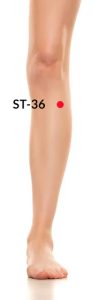 Stomach 36: Located four finger breadths below the eye of the knee, one finger breadth lateral to the anterior crest of the tibia, in the tibialis anterior.
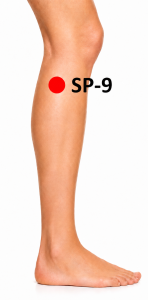 Spleen 9: On the lower border of the medial condyle of the tibia, in the depression on the medial border of the tibia.
Rehabilitation and Return to Activity
Once the tibialis anterior muscle has healed, another step is necessary before engaging in the original offending activity. No different than any other sports related injury, the anterior leg muscles must be progressively stretched and strengthened to prevent re-injury. The key to successful rehabilitation is a gradual increase in its intensity.
Certified athletic trainer and strength and conditioning specialist, Benny Vaughn, LMT, suggests resistance exercises using rubber tubing or bands. Performing resistance exercises consisting of ankle dorsiflexion, plantar flexion, eversion and inversion can lengthen and strengthen the lower leg muscles, providing added insurance against future shin splints.
Clinical Review
Anterior shin splints are a common injury, with every sports training facility seeing its fair share of painful tibialis anterior muscles. The massage techniques discussed here will maximize a bodyworker’s role in reducing anterior shin splint pain and damage.
The number one reason for recurring shin splints is an athlete’s impatience with the healing process and the premature return to activity. Educating these clients about the how, what and why of their anterior shin splints will facilitate prevention, healing and rehabilitation, paving the way for their full recovery.
Updated May 26, 2026.
Earn continuing education credit for this article contained in our Common Sports Injuries series. Click here to enroll.

 Follow Us