





Massage Benefits for Veterans
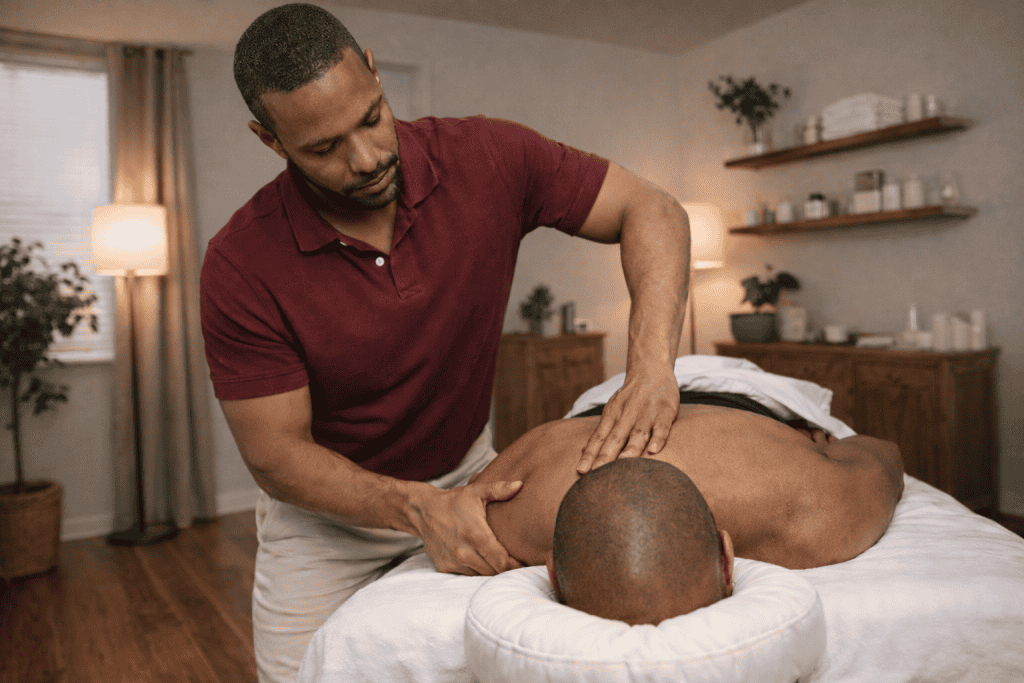
Massage therapy can benefit veterans in many profound ways. In writing this article, I recall sessions with veterans that reminded me of the powerful nature of touch. These sessions highlighted a deep value of therapeutic touch that goes beyond physical impact. I interviewed many of my veteran clients and also inquired with peers to garner the benefits of massage for veterans straight from their perspectives.
Veterans’ experiences with massage therapy vary widely depending on their service history, injuries, mental health needs, and personal comfort with touch. The stories shared in this article reflect individual perspectives from veterans across multiple branches. While no single approach works for everyone, these accounts highlight common themes including trust, safety, pain relief, and nervous system regulation that can guide massage therapists in offering thoughtful, trauma-aware care.
Massage Benefits for Veterans’ Physical and Mental Health
It is common to recognize the impact of Post Traumatic Stress Disorder (PTSD) within the veteran population. Sabrina, Army branch, discusses this in tandem with the need to trust one’s practitioner when she writes:
“I am a veteran and I have PTSD and severe anxiety; when I receive massage my overall sleep is so much better along with the tension I carry in my neck and shoulders. I am also a massage therapist myself, I think massage therapy is extremely beneficial to those who suffer PTSD or even TBI as long as you are receiving from a knowledgeable individual.”
It’s important to recognize that PTSD, complex PTSD, traumatic brain injury (TBI), and chronic pain can overlap but are distinct conditions. Each presents differently in the body and nervous system, which means veterans may respond to massage in different ways. A trauma‑aware, client‑led approach helps ensure that each session supports the client’s unique needs without assuming a uniform experience.
Sabrina’s sentiment is shared by Larry, Marine branch, who acknowledges his case of PTSD was also alleviated by including massage within his treatment plan.
“My body feels so much better and my mental health has improved a lot. I have Complex PTSD. I have fewer nights with nightmares with sleep much improved. The distressing memories have almost entirely disappeared. It’s been great to see both a massage therapist and mental health therapist each month. Receiving both therapies has helped me in more ways than I can imagine.”
Research from the U.S. Department of Veterans Affairs’ Whole Health program notes that massage therapy may help reduce pain, improve sleep, and support emotional regulation for veterans managing PTSD, chronic pain, and stress-related conditions. Similarly, the American Massage Therapy Association (AMTA) highlights massage as a supportive therapy that can enhance quality of life and complement mental health treatment for veterans.
Restoring Mobility and Reducing Chronic Pain After Military Service
Improving functional movement is another benefit of massage for veterans. Very often, the wounds of war have negatively impacted bone, joint, and muscle health. Harold, Army branch, underscores how massage helps with his mobility:
“Well I tell fellow veterans that I have met after my retirement that I found the right massage therapist. When I actually got worked on, it was a whole lot of pain, but the results were instant. I felt like a whole different person. From movement in general to getting my normal walk again. If every veteran was able to get the right massage before they have surgery, I would recommend it. Once I felt amazing after the massage, it made going to the gym and physical therapy easier. Being able to move so you can do the physical helps and I owe that to my massage therapist.”
The Role of Therapeutic Touch in Veteran Mental Health
Aiding mental health is another great benefit of massage for veterans. The negative impacts on mental health have come to light in recent decades. This significant need is highlighted by Kendall, Marine branch:
“When I get a massage, it helps my mental mood. My therapist is really great about helping me remain relaxed on the table. This is hard for me as sleep is difficult some nights and some days my anxiety is through the roof. But I appreciate how my therapist keeps me calm with her hands and the breathing she has me do on the table. I appreciate massage in my life very much.”
Creating Safety, Presence, and Trust on the Massage Table
Robert, Army branch, discusses how massage therapy eases the mind which, in turn, eases the body, allowing him to relax more easily upon the treatment table.
“As an Army veteran, I served my country in Iraq and Afghanistan. Coming home, I found it very difficult to find moments of peace when my mind was so used to war and battles. My mind used to recreate the war scenes often in my head. Even to this day, this happens occasionally. My massage therapist helps me remain present, reminding me I am not there anymore, that I am safe on the massage table. That simple reminder makes a big difference for me.”
Massage Benefits for Veterans with Chronic Pain
Aiding a client with chronic pain can have a positive impact on muscle function and performance. This gift allows clients to return to activities they enjoy which is what Sarah, Navy branch, describes:
“I feel blessed to have met my massage therapist shortly after returning from the Middle East many years ago. Serving three tours of duty, I came home unaware of how war zones affected my mind. I always felt the pain in my body. My massage therapist was great at working out the pain and discomfort in my muscles. She has a million great techniques to work out all my problem spots. But most of all, the relief of the pain has helped me return to the sport I love, volleyball. It is refreshing to be able to play again.”
Complementary Therapies That Enhance Massage for Veterans
In addition to massage, there can be additional benefits from adding cranial sacral therapy within therapeutic sessions. The John E. Upledger Foundation has conducted research indicating how the inclusion of cranial sacral therapy has many benefits for veterans including reducing physical pain, restoring clearer mental faculties, reducing depression and improvements in insomnia and sleep patterns.
Cranial Sacral Therapy and Nervous System Regulation
Personally, I often include cranial sacral therapy and reflexology into sessions as these both have positive effects upon the nervous system to induce a parasympathetic response. Including either modality or both (either at the beginning or end) helps ease the physical body to allow me to apply normal massage application more easily and effectively.
Supporting Emotional Release During Massage Sessions
I am also cognizant to remember essential steps in assisting clients who experience emotional release. This phenomenon can occur as feelings, thoughts, and emotions stored within the body arise during massage sessions.
There are three key steps a massage therapist can recall when interacting with a client experiencing such a release. These assist the client in transitioning their sympathetic (fight, flight, freeze) response toward a parasympathetic (“rest & digest”, calming) response.
Key Steps for Massage Therapists During Emotional Release
- Acknowledge the shift, pause, keep hands on the body
- Validate that it’s OK to have feelings upon the table
- Continue as directed by the client
Massage Therapy as a Path Toward Healing and Wellness for Veterans
As veterans receive more therapeutic massage, the above-mentioned benefits can be witnessed restoring health and wellness to ease the negative events experienced during their military service. By approaching each session with presence, consent, and trauma‑aware awareness, massage therapists can help veterans rebuild trust in their bodies and access meaningful relief. The stories shared here remind us that massage therapy for veterans is not just a modality—it is a compassionate partnership in healing.
Professional Advocacy: How AMTA Is Expanding Access to Massage Therapy for Veterans
The American Massage Therapy Association (AMTA) continues to advocate for increased access to massage therapy for veterans across the United States. Their recent initiatives highlight the need for more research, expanded coverage within the VA system, and greater recognition of massage therapy as a non‑pharmacological option for chronic pain, stress, and trauma‑related conditions.
AMTA’s ongoing work includes supporting legislation, funding research, and collaborating with policymakers to ensure veterans can receive safe, effective, and accessible massage therapy services. For therapists who want to stay informed or get involved, AMTA provides updates and resources through their advocacy platform.
You can read more about their efforts here:
AMTA – Advocacy for Veteran Massage
 Follow Us