




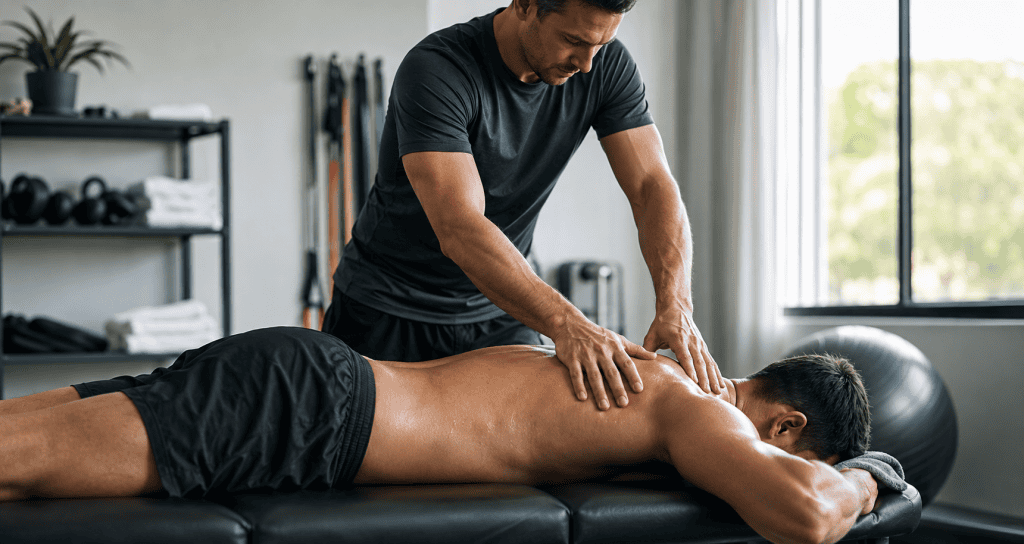

What is Sports Massage?
Sports massage encompasses the application of classic (Swedish) massage techniques to meet the needs of athletes. The classic massage techniques of effleurage, petrissage, friction, vibration and percussion are utilized along with stretching, massage tools, and hydrotherapy applications.
Treatment goals vary depending on the athlete’s their current level of participation. A professional athlete will be treated differently than the weekend warrior who plays on occasion.
The Four Modes of Sports Massage
There are four modes of sports massage: pre-event, post-event, in-season maintenance and off-season maintenance.
Pre-Event Sports Massage
Pre-event sports massage is a short treatment provided within an hour before a competition, training session or special sporting event. The intention is to prepare the athlete for optimal physical and mental readiness. Tissue activation and preparation are the principal objectives.
Post-Event Sports Massage
Post-event sports massage focuses on recovery of the athlete shortly after a competition, training session or special sporting event. The intention is to reset the nervous system and aid in muscle recovery. Tools, such as hydrotherapy, may also be employed to support the recovery process.
In-Season Maintenance Sports Massage
In-season maintenance sports massage is designed to keep an athlete in optimal condition during their active competitive season. Muscle recovery and injury prevention are key to this approach. Sessions are incorporated into the athlete’s overall training schedule. This may occur several times weekly depending on the intensity of training efforts and may incorporate tools such as hydrotherapy for recovery needs.
Off-Season Maintenance Sports Massage
Off-season maintenance sports massage is designed to prepare the athlete for their competitive cycle and season. Injury rehabilitation, muscle rebalancing, lower-intensity training support and helping the athlete relax are paramount in this approach.
Adapting Swedish Massage Techniques for Athletes
A common misconception in the massage field is that “Swedish” massage equates to relaxing, non-therapeutic massage. Actually, the classic Swedish techniques that all entry-level schools present to students are therapeutic in nature as they produce physiological effects within the body. These techniques are modified to adapt to the needs of athletes.
Key Point: Sports massage is not a separate collection of massage techniques. It adapts classic Swedish massage techniques—including effleurage, petrissage, friction, vibration, and percussion—to meet the specific needs of athletes.
There are many ways classic Swedish massage techniques can be adapted to alter their physiological effects.
- Cadence
- Pressure
- Stroke length
- Session duration
- More holding, less movement
- More rocking, less pressure
- Broader strokes
- Changing the angle of the tool against the body
- Incorporating tools to enhance manual techniques
Modifying massage strokes and techniques in these manners will help the sports massage therapist adapt to any body and situational approach.
Developing Skills as a Sports Massage Therapist
Quite often, massage therapists inquire about how to work with professional athletes. Many sports massage therapists tell me that they needed to “pay their dues” which means performing massage at volunteer sports events. Many sports massage therapists are hired because they display a varied skill set to help with a wide range of sports-related injuries. I suggest to any sports massage therapist to participate in events for many different sports. Do not “pigeon-hole” yourself with only one sport. Show that you understand sports massage and sports-related injuries broadly.
Why Kinesiology Matters in Sports Massage
Kinesiology knowledge becomes significantly important to aid in understanding how an athlete uses their body. A well-trained sports massage therapist can quickly determine which muscles need to be addressed to ensure optimal joint function, allowing the athlete to perform at peak potential.
It is important for anyone practicing sports massage to understand the sports an athlete performs to better understand how to best support this athlete. Studying kinesiology will help this therapist comprehend any athlete’s body and movement patterns needed to perform tasks necessary for their sport.
An example of this concept at play is with a baseball pitcher. Throwing a baseball over 90 mph is an incredibly difficult feat for the human body to accomplish. To throw a baseball this fast, the lower limbs create a generating force conveyed through the long leg bones. Then rotational energy needs to be generated by the hips and torso to further drive kinetic force. A hip-shoulder separation involving keeping the upper body closed inward longer than the hips allows for a spring-like force to occur through the upper limb bones. The rotator cuff muscles and scapula bone fixators need to stabilize the upper torso and limbs to allow this force transfer.
Building Trust and Professional Connections
Networking is also vital to the massage therapist seeking entry into the sports sector of our field. Athletes need to entrust their body to a therapist. Developing relationships with players, coaches and ancillary staff will be key to developing trust and rapport. Too often, I hear massage therapists scoff and express disappointment at massaging coaches and family members. Remember these individuals can either speak positively or negatively about you to the prized athlete your heart desires to work with. Treat these individuals just as well as you would the famous athlete.
Supporting Athletes Through Sports Massage
Massage therapists who specialize in treating athletes to support their training and recovery will be more successful and stand out in the fitness and athletics industry. A well-trained sports massage therapist will be able to skillfully employ a variety of modalities, such as myofascial release, lymphatic drainage, and any other techniques that support neuromuscular function and athletic performance.
 Follow Us